Press releases
President Vahagn Khachaturyan visited the Byzantine and Christian Museum
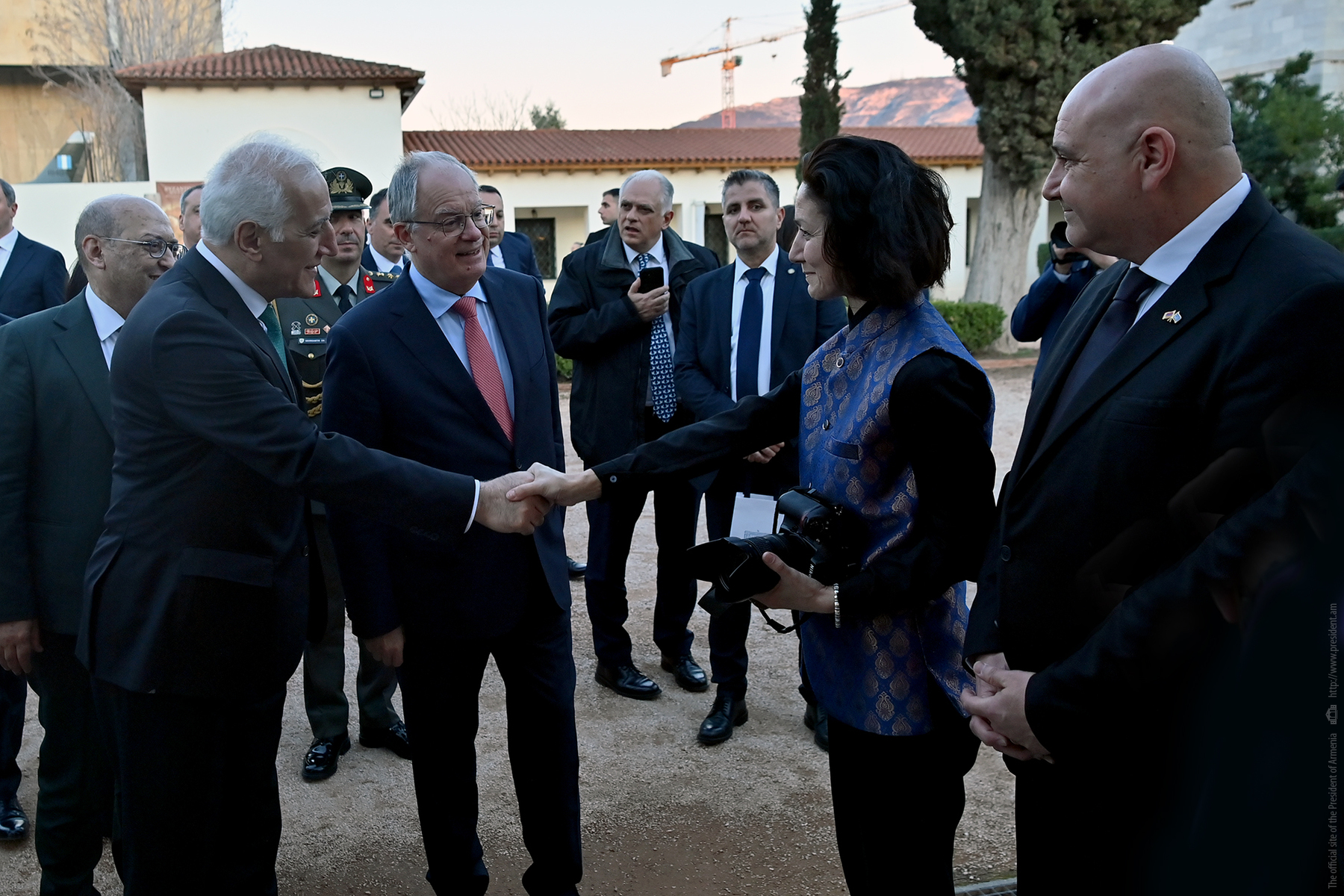
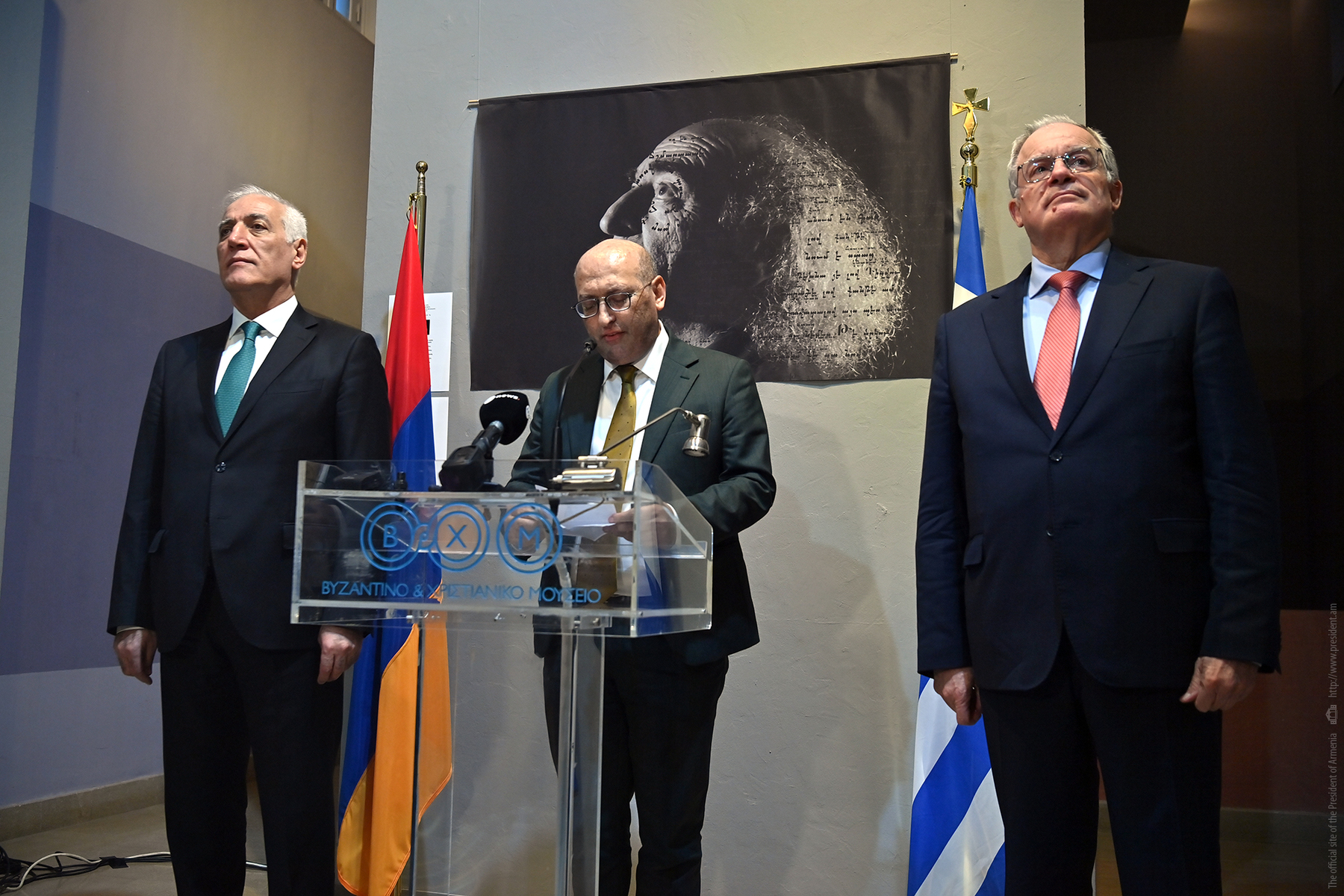
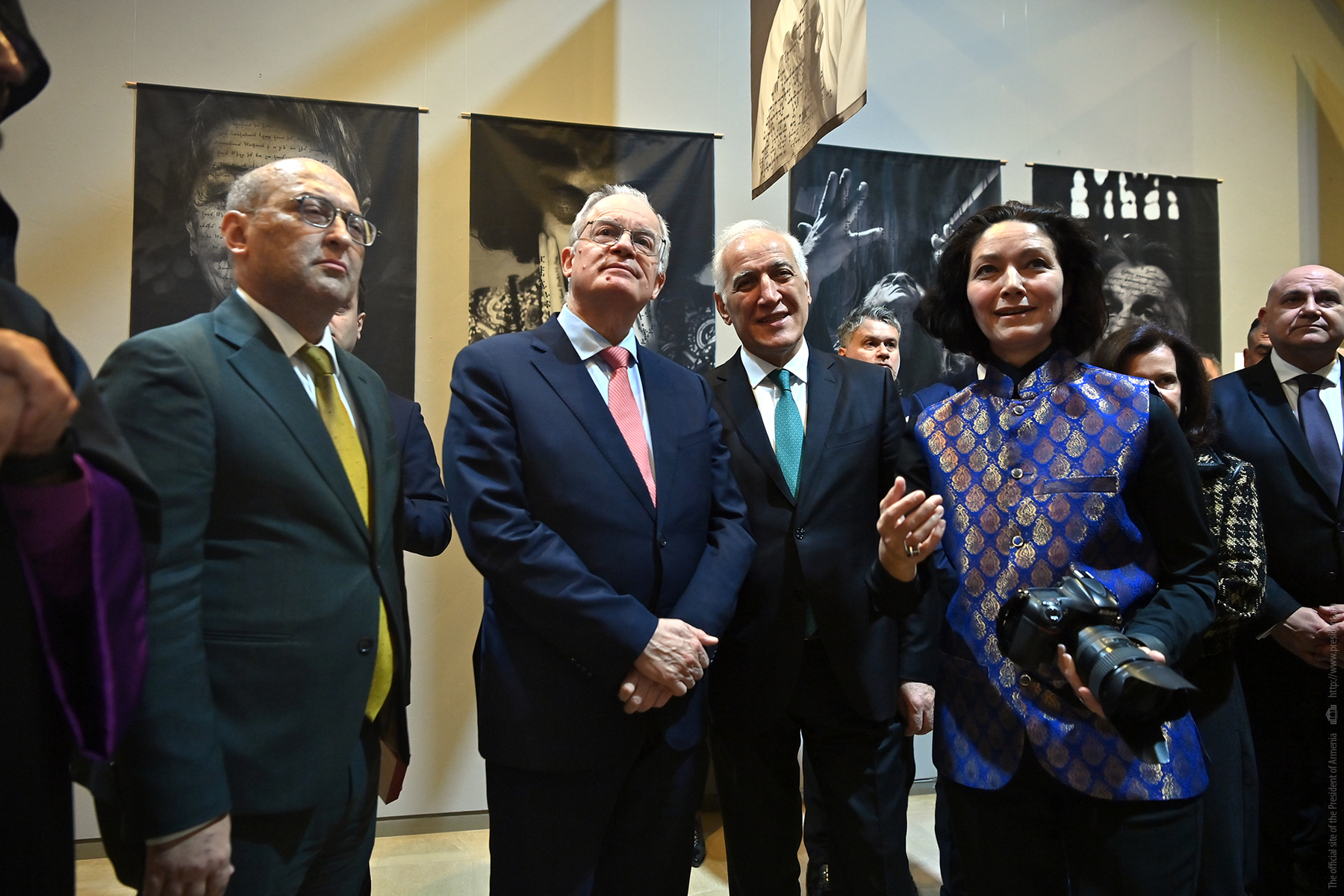
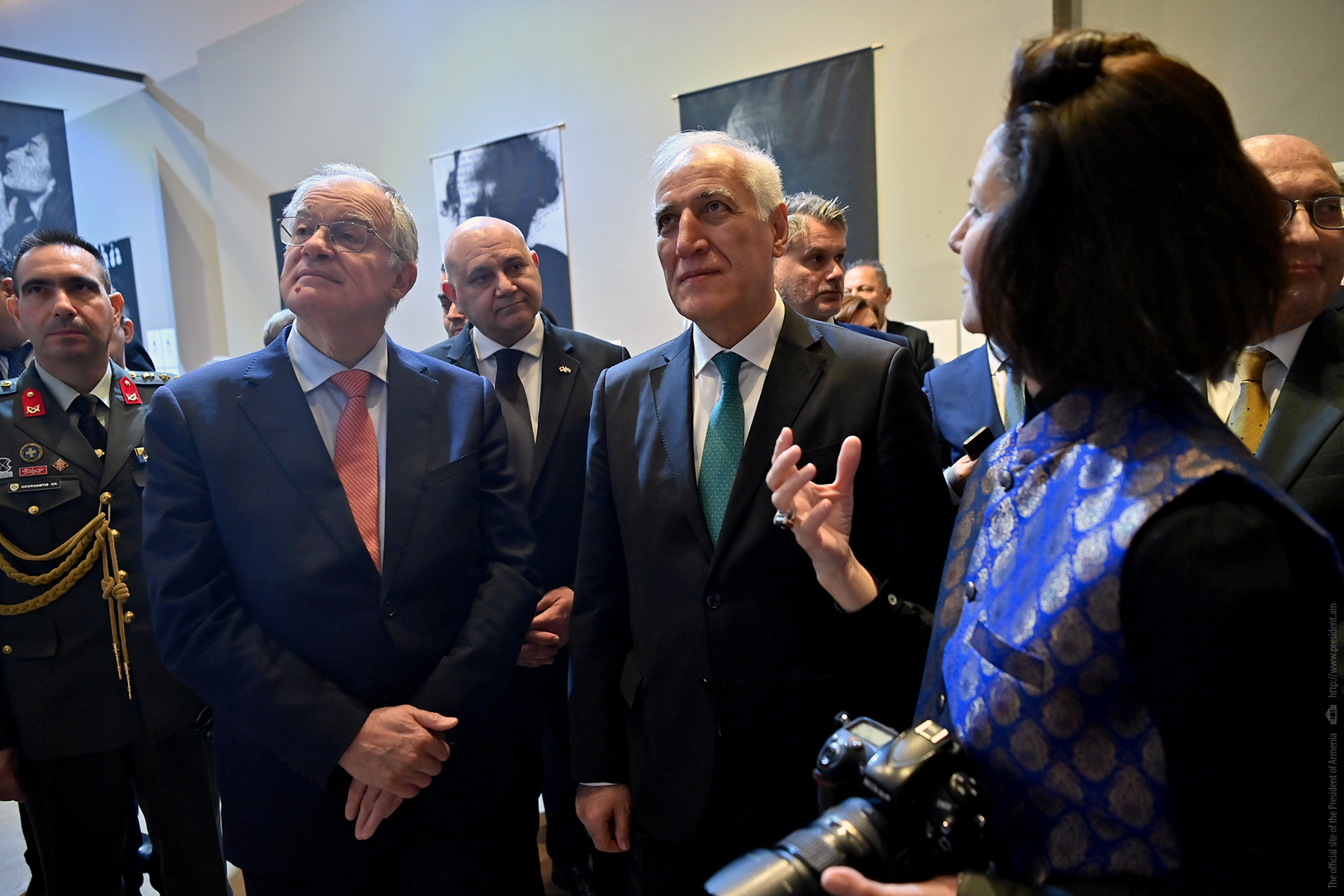
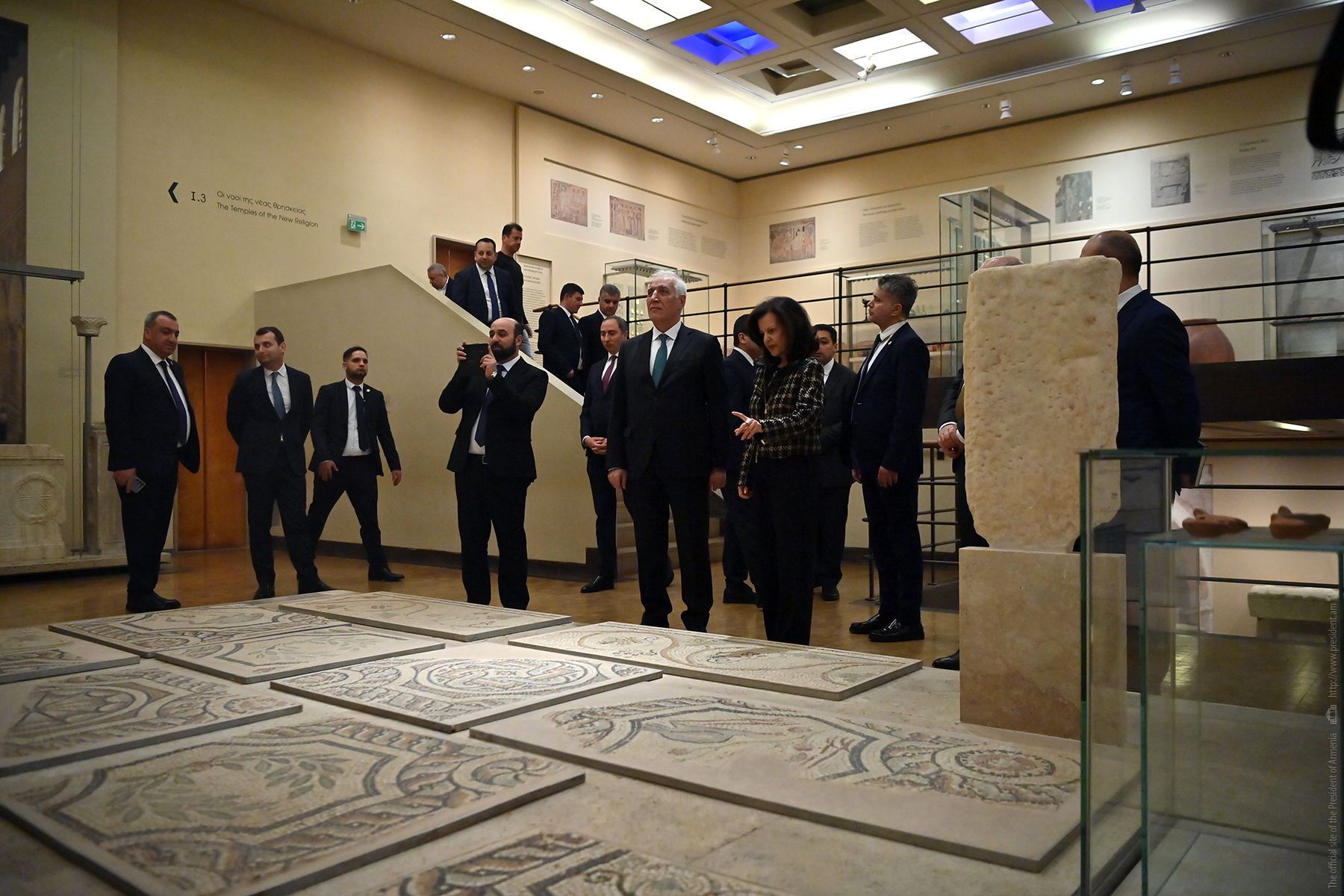
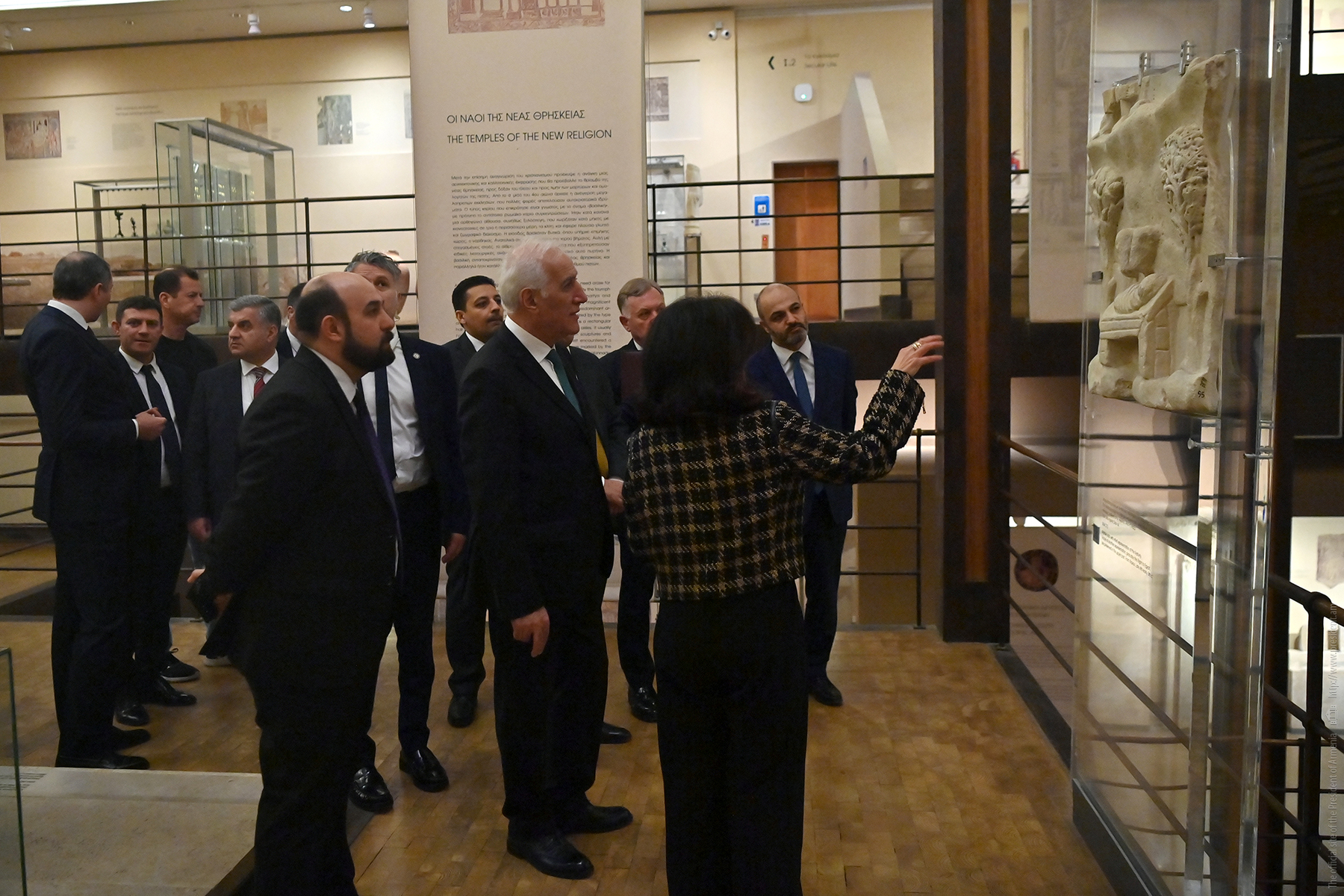
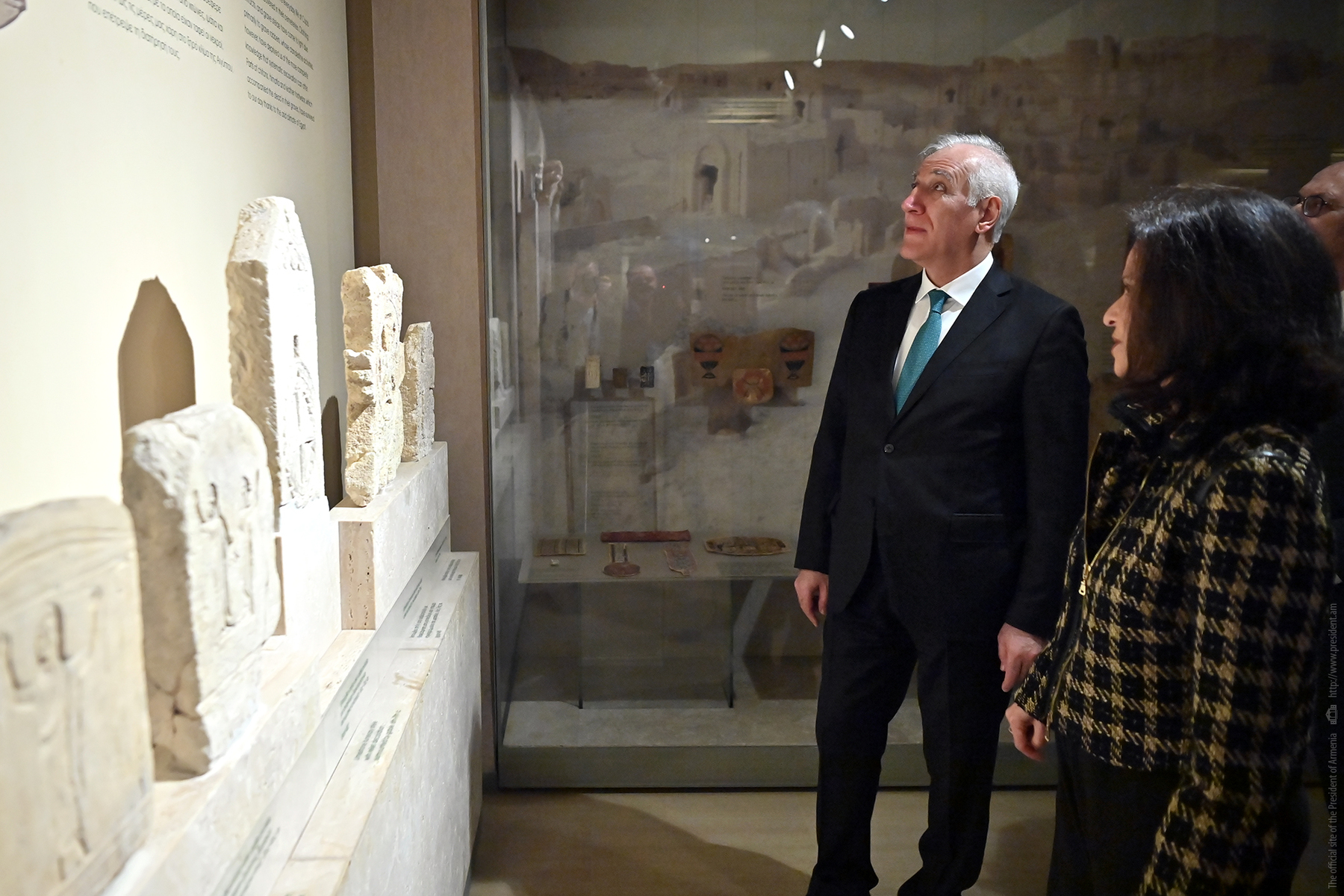
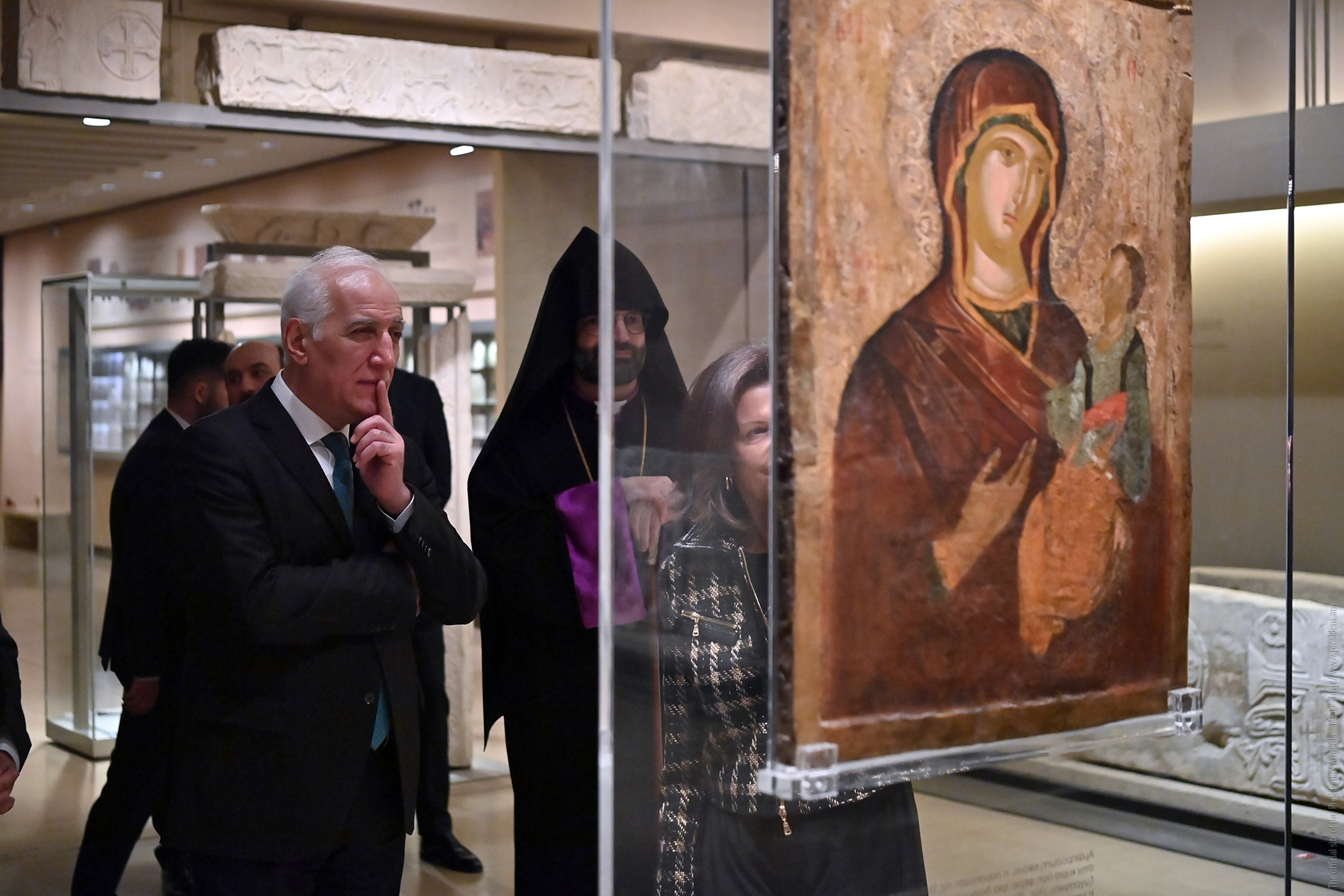
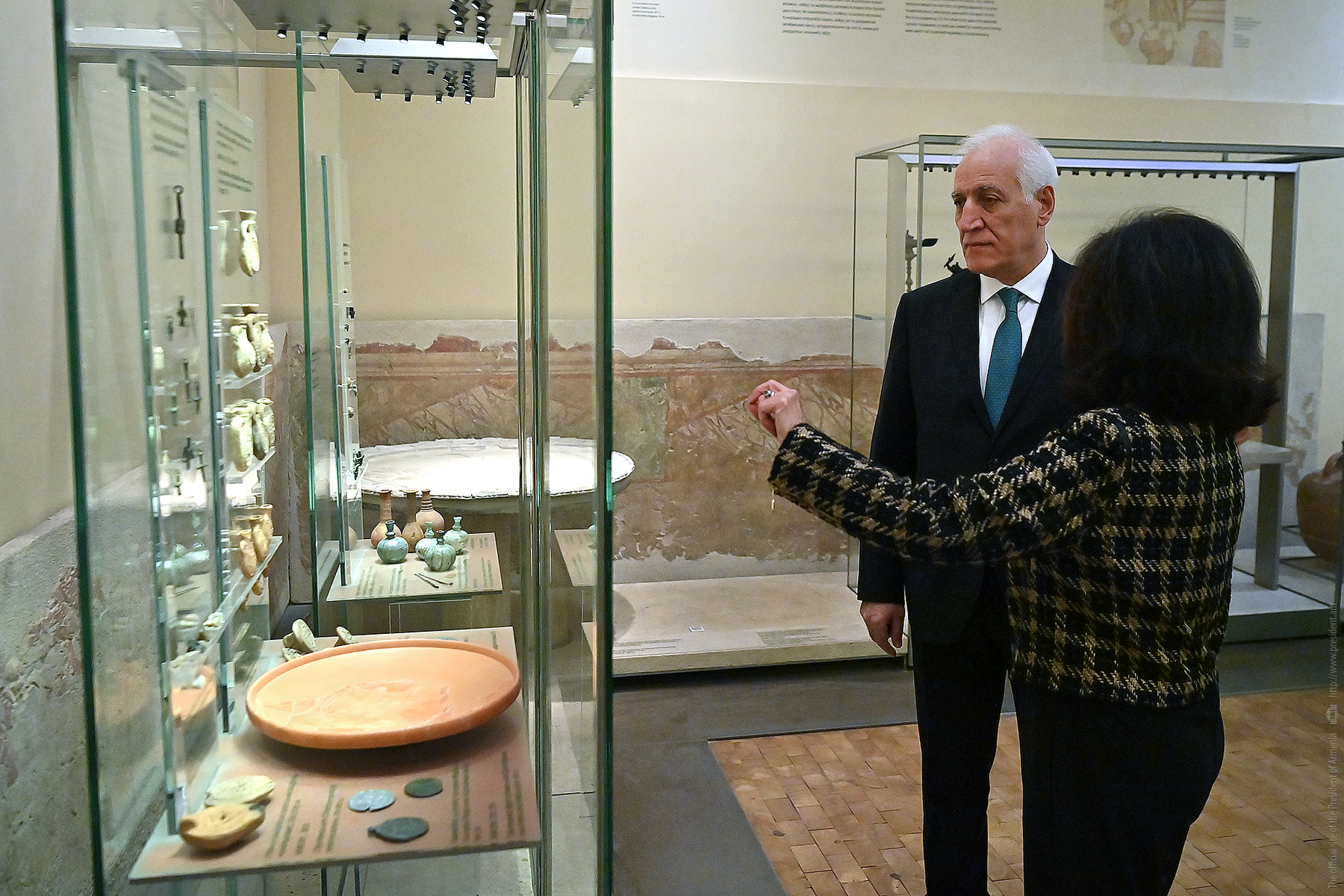
Within the framework of his state visit to Greece, President of the Republic Vahagn Khachaturyan, together with his counterpart President Konstantinos Tassoulas, visited the Byzantine and Christian Museum.
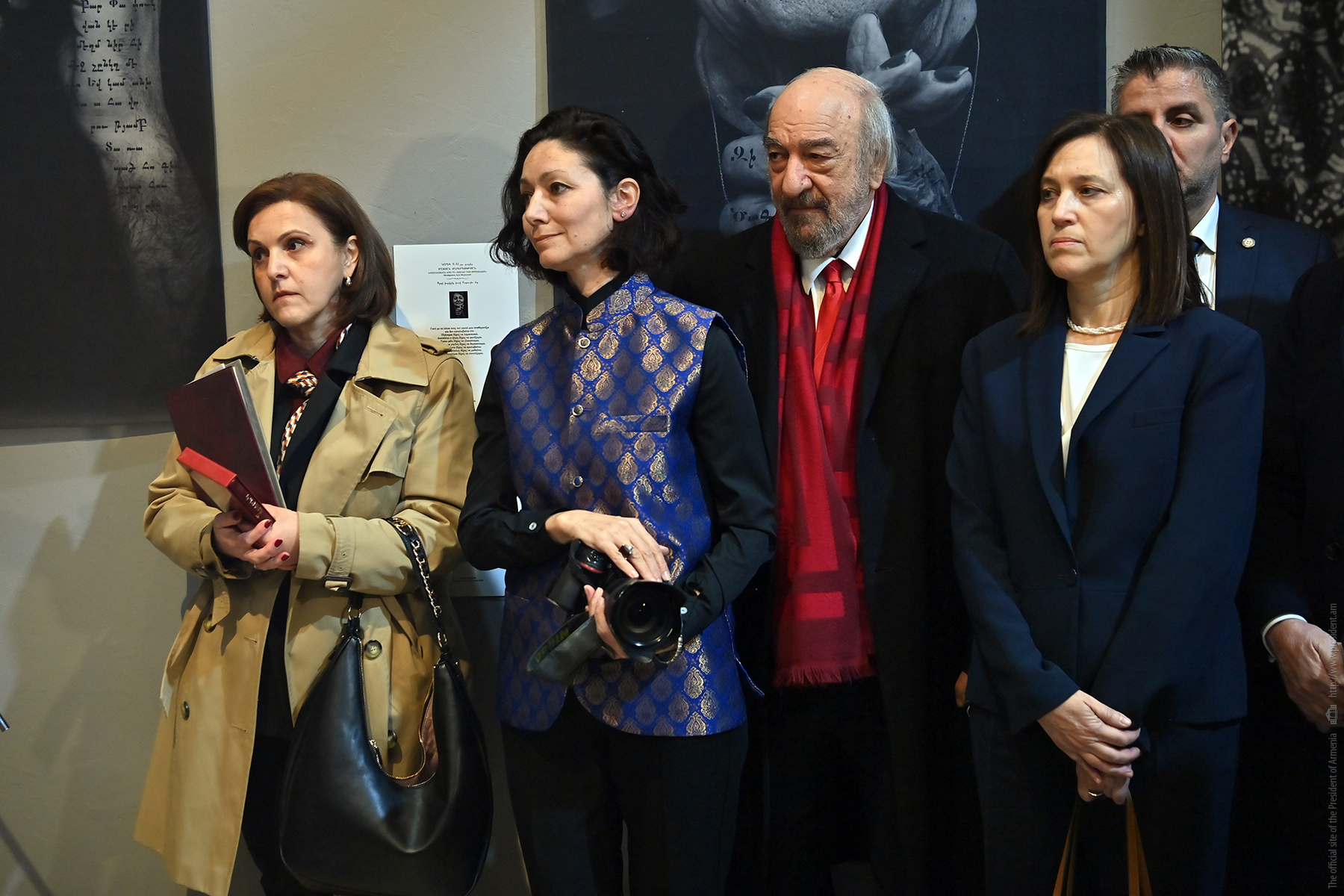
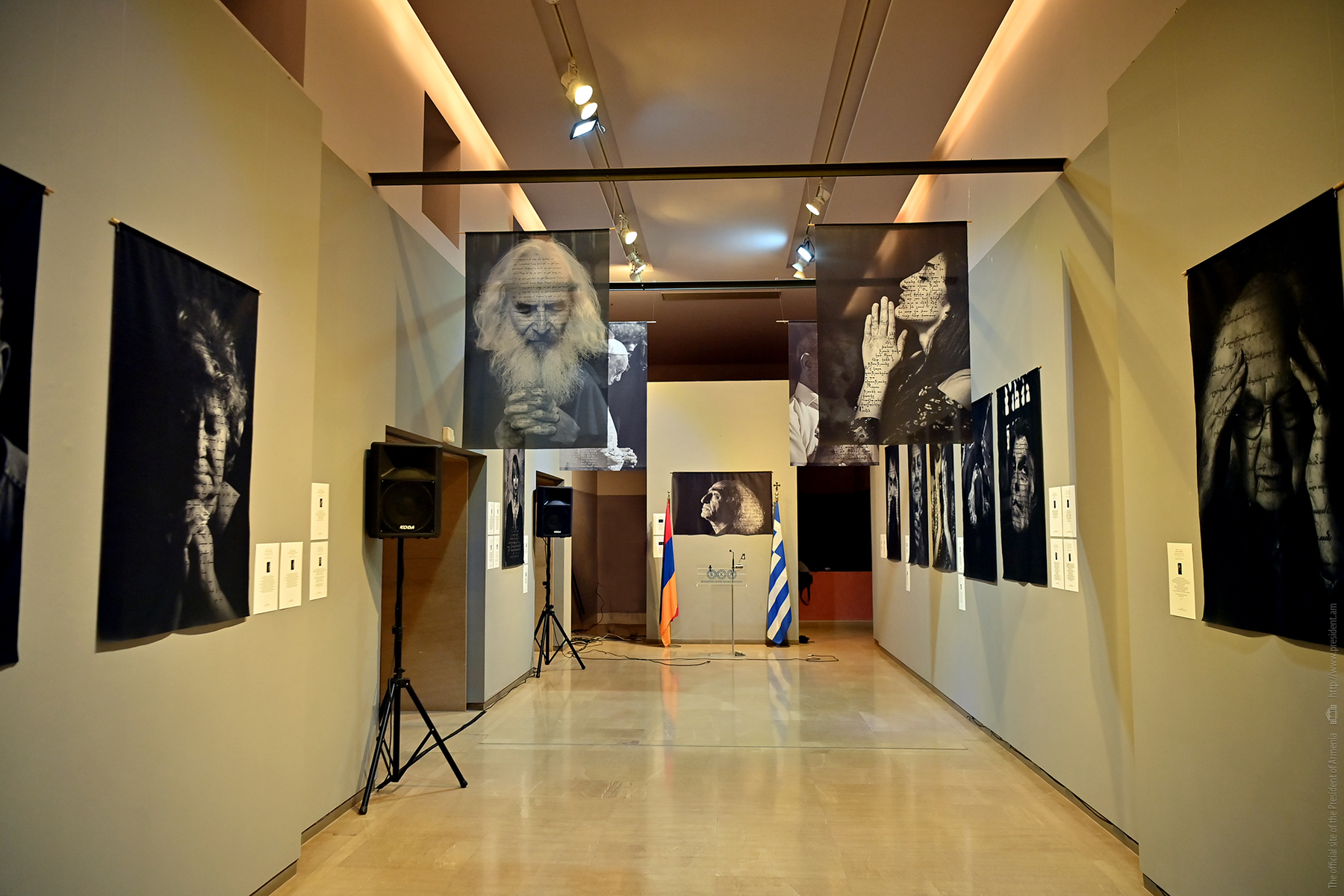
The presidents attended the exhibition titled “Prayer for Peace” by Armenian photographer and designer Tatev Mnatsakanyan, organized by the Embassy of Armenia in Greece.
The exhibition is dedicated to popularizing and disseminating the culture of peace through the fusion of photographs of prominent figures and the prayers of Gregory of Narek.
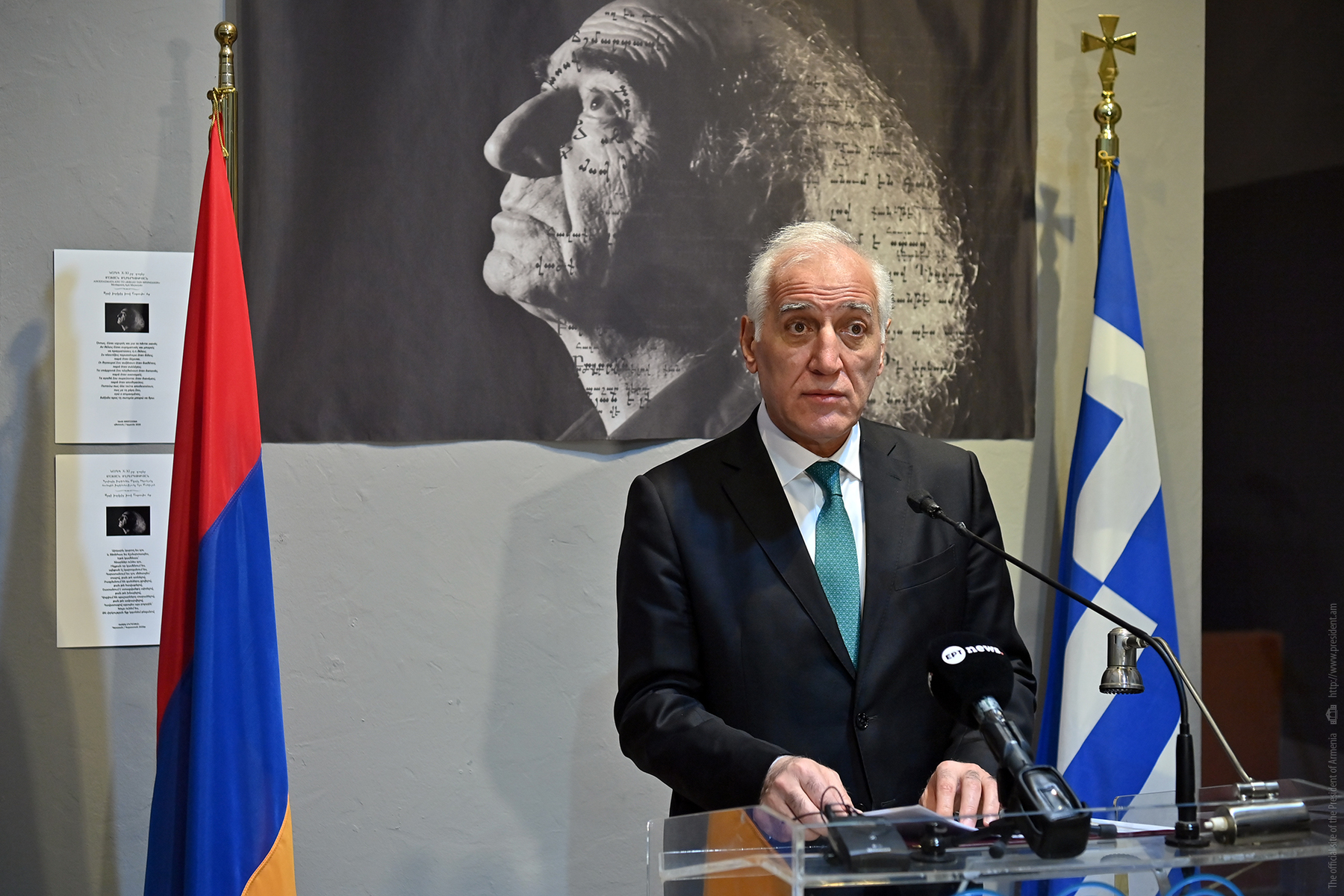
At the opening ceremony of the exhibition, President Khachaturyan delivered a welcoming speech:
“It is a great honor for me to be in Athens today, in this exceptional center of world civilization, and to participate in the opening ceremony of the exhibition “Prayer for Peace,” dedicated to Gregory of Narek, at the Byzantine and Christian Museum. This event is not only an important cultural initiative, but also a deeply symbolic meeting centered on spiritual heritage and the pursuit of peace.
The relations between Armenia and Greece are based on centuries-old friendship, mutual respect, and shared civilizational values. Our peoples are united not only by common historical destinies, but also by the rich layer of Christian faith, humanism, and culture that continues to shape our identity today. Presenting the legacy of Gregory of Narek in Athens is yet another testimony to this friendship, a bridge between the past and the present, between Armenia and Greece.
Theologian, poet, musician, and philosopher Gregory of Narek is one of the profound and most universal figures of Armenian spiritual thought. His works have long transcended national borders and become an integral part of world culture. Masterpiece of Gregory of Narek, The Book of Lamentations, is not only a prayer but also a confession born from the depths of the human soul, where pain, sin, hope, and love merge into a single aspiration, the search for peace and inner reconciliation. It is therefore no coincidence that Gregory of Narek was canonized and proclaimed a Doctor of the Universal Church.
The title “Prayer for Peace” resonates with the challenges of our time. Today, when the world faces uncertainties, conflicts, and a crisis of values, words of Gregory of Narek sound more relevant than ever. He reminds us that peace is not merely a political agreement; it is first and foremost a spiritual state, the result of trust and understanding among people and nations.
Armenia consistently promotes the peace agenda, believing that stable and lasting peace in the region has no alternative. This path is not easy, but it is the only one that can ensure a secure future for our citizens and the entire region. At the core of the peace agenda lie the same values Gregory of Narek spoke about: human dignity, forgiveness, responsibility, and faith in the future.
Culture and art have a special role in this process. They can achieve what politics sometimes fails to do: create dialogue and restore trust. This exhibition invites us to reflect not only on the past, but also on our responsibilities in the present and our tasks for the future.
Dear friends,
I would like to particularly emphasize Greece’s important role in promoting cultural dialogue and the ideas of peace. The historical friendship between the Armenian and Greek peoples obliges us to continue this cooperation in the fields of education, culture, and humanitarian initiatives. We believe that such programs strengthen not only bilateral relations, but also contribute to shaping a more peaceful and harmonious international environment.
Allow me to thank the organizers of this exhibition, the museum’s leadership, and all those who have devoted their efforts to this important initiative. Your work once again proves that culture is a living bridge between peoples.
May prayer of Gregory of Narek for peace resonate not only in this hall, but also in all our hearts. May it serve as a reminder that peace begins with each of us with our thoughts, our words, and our actions.”